
Enfour history · Since 1993
At the start of mobile computing
Enfour wrote its first Newton software in 1993, the year the first PDA went on sale. For the next fifteen years we built Japanese and Asian-language software for almost every handheld that followed, then took it to i-mode phones, smartphones and the iPhone.
Overview
From PDAs to the phone in your pocket
Enfour was there at the very beginning of mobile computing. Our first product was software for the Apple Newton, and our speciality became the hard part of handhelds in Asia: getting them to read, write and understand Japanese, Chinese, Korean and other scripts.
That work took us from the Newton to Psion and Symbian, Palm and Windows CE, and then into the mobile phone boom, where we built tools for i-mode developers and ran our own services on all three Japanese carriers. When the iPhone arrived, it felt like coming home.
Before the Newton, Enfour started on the Mac. See our Mac software, from Japanese DTP tools to UniDict.

The Newton years, 1993–1998
The Newton: where Enfour began
In August 1993 Enfour became the first company to create third-party software for the Apple Newton, the first PDA. Enfour went on to localise the Newton for Japan with UniFEP, a Unicode input method first released for the Newton in 1994, and later completed Chinese and Russian versions. The MessagePad 130 sold in Japan came bundled with UniFEP 2.0.
Fonts, email software, kanji handwriting recognition, dictionaries and accessories followed. In 1997 Enfour filled a large booth at Macworld Expo Tokyo with Newtons running Japanese, and showed NLK, the Newton Language Kit, which made the Newton multilingual without changing its ROM. In March 1998, when Apple announced it was stopping Newton development, Enfour announced the same week that it would carry on, and launched the Japanese MessagePad 2100 on schedule.
Enfour also sold the Newton directly. In 1996 it opened The Newton Shop in Ginza, Japan’s first store dedicated to the Newton, followed in 1998 by the PX Store for mobile devices in Shinjuku.
Newton products
Software and accessories for the MessagePad and eMate
UniFEP and NLK
Japanese input and display for Newton OS 2.0, then the Newton Language Kit for OS 2.1: a real-time localisation engine for the MessagePad 2000, 2100 and eMate 300. Chinese and Russian versions followed in 1998.
HWCR kanji handwriting recognition
A Japanese handwriting recognition module, so users could write kanji and kana directly on the Newton screen.
Dictionaries
UniDict for Newton (English–Japanese), Kantanji, a single-kanji dictionary, and the Large Dictionary for kanji conversion.
Email and connectivity
GoFetch, Internet email for Newton OS 2.x; UniMail, the only Newton email software for OS 1.x; X-Port Japanese edition for PC transfers; Dear Zaurus for data exchange with Sharp Zaurus.
Fonts and utilities
Ashiya Font and a monospaced Gothic for the Newton, UniCalc Pro, the Shodo brush-painting app, Mandal-Art, PocketMoney, StreetMap, RailMap and the ViewFrame developer tool.
Accessories
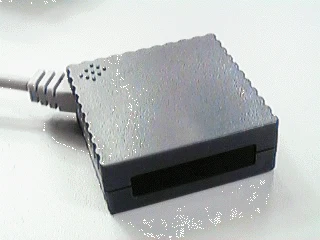
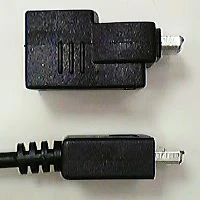
One-piece direct serial cables for the MessagePad 2x00 and eMate, a mini AC adapter, and matchbox-sized IrDA/ASK infrared pods for Mac and PC (1998).
PDAs and early smartphones
Psion, Palm, Windows CE and Nokia
From 1999 Enfour was the face of Psion in Japan. UniFEP for EPOC brought Japanese to the Series 5, Revo and 5mx, followed by Traditional Chinese, Korean, the Japanese 5mx PRO and the “Chinese revo” Psion 618C with UniFEP built in. Enfour also released UniFEP for Windows CE and Pocket PC, and Japanese software for Palm, Pocket PC and EPOC.
Psion and Symbian (EPOC)
UniFEP V2 (2000), an SDK for third-party developers (2001), Japanese and Chinese web browsers (2002), and a CJK solution for the Psion Teklogix netPad (2002).
Nokia Communicator
UniFEP for Communicator brought Japanese input to the Nokia 9210i. In 2003 Enfour became the first Japanese developer on the Nokia Software Market. UniDict for S60 followed in 2007.
Sony CLIÉ and Palm
In 2001 Sony chose Enfour’s TypeBank screen fonts for the CLIÉ PEG-N700C, the first Palm OS handheld with a 320 × 320 screen.
Honda Internavi
In 2000 Enfour worked with Honda so that its Internavi car navigation portal could send places to PDAs, Psion, Windows CE, Palm and Zaurus.
The mobile phone boom
i-mode and the first mobile internet
NTT DoCoMo launched i-mode in February 1999, and the mobile internet went mass-market in Japan. Enfour moved with it. Keitai-Font (2001) showed i-mode emoji on desktop computers for the 18 million people then using i-mode handsets, and i-JADE let developers run i-mode Java applications on a Mac or PC.
Enfour then became a content provider. TangoTown, a Japanese language and lifestyle service for English speakers, launched on J-Phone in May 2002 and on i-mode that October. By 2003 Enfour was the only company offering multilingual services on the official menus of all three Japanese carriers: i-mode, J-Sky and EZweb.
A TrueType font and proxy service that displayed i-mode emoji and gaiji on Windows and Mac, for developers and everyday users.
TangoTown
Dictionaries, kanji lookup, phrasebooks and daily lessons for English speakers in Japan, on i-mode, J-Sky (later Vodafone) and EZweb.
Dictionaries on the phone
An American Heritage mobile dictionary service (2003), a dictionary service on i-mode (2004), and GlobalNavi on Vodafone Japan (2003).
i-mode abroad
In 2005 Enfour launched Oxford Dictionary, TangoTown and Multilingual Translator on Telstra’s i-mode in Australia.
2008 onwards
Back to our roots with the iPhone
In August 2008 Enfour announced a suite of iPhone and iPod touch apps. “We are thrilled to be returning to our roots,” said Richard Northcott, Enfour’s president. “The iPhone allows us to provide truly complete solutions of even hundreds of megabytes, entirely on the device.” American Heritage, Oxford, Longman, Collins and more followed, and our dictionary and language apps still run on iPhone, iPad and Mac today.
Timeline
Enfour from 1993 to today
1993
First third-party software for the Apple Newton (August).
1994
Enfour, Inc. founded in Tokyo (July). UniFEP Japanese input released for the Newton.
1996
The Newton Shop opens in Ginza, Japan’s first Newton store.
1997
Newton Language Kit shown at Macworld Expo Tokyo.
1998
Japanese MessagePad 2100; Enfour sticks by the Newton. Chinese and Russian Newton, UniDict, IrDA pod, PX Store, US office.
1999
Enfour becomes the face of Psion in Japan. UniFEP for EPOC.
2000
UniFEP V2 for EPOC. Honda Internavi PDA project. Enfour Group headquarters and Hong Kong company.
2001
Keitai-Font for i-mode. Sony CLIÉ fonts. Palm, EPOC and Windows CE titles. Chinese revo. Japanese 5mx PRO.
2002
TangoTown on J-Phone and i-mode. Chinese UniFEP for Pocket PC. UniFEP for Communicator.
2003
Official content on all three Japanese carriers. First Japanese developer on the Nokia Software Market. Tenth anniversary of the PDA.
2005
i-mode content in Australia with Telstra.
2007
UniDict for S60.
2008
Multilingual translation on i-mode and Yahoo!Keitai. iPhone strategy announced.
2009
First iPhone apps. PDA support ends (24 April) after 16 years.
2010
Longman Business Dictionary, Nikkei Business economics dictionary and more reference titles for iPhone. Typos Allmighty font sales end (31 March).
2011
App Store sales donated to relief after the Great East Japan Earthquake.
2012
Kenkyusha Luminous and Sakura English–Japanese dictionaries for iPhone and iPad, among a dozen new titles.
2013
Oxford dictionary apps discontinued (August).
2015
Enfour’s dictionary apps return to the App Store (June).
2017
Korean keyboard with a built-in dictionary for iPhone (December).
2018
Enfour founds SEN, a digital currency for digital content, with its own token, micro-payments and the Content SENtry copyright clearinghouse.
2019
au EZweb official content closes (April).
2020
TokenPost Japan joint venture (February). Sakura Kanji Daijiten for professionals (April). Korean handwriting keyboard (May) and a Korean keyboard for English speakers (July).
2021
i-mode official content closes in November, after almost 20 years. PCR test kits on sale in Japan (June).
2026
FrontierStack launches (9 November): a Mac app that lets AI manage servers without ever seeing passwords or API keys.
Based on Enfour’s original press releases and product pages on www.enfour.com and www.enfour.co.jp.
Next steps
Three ways to start with Enfour
Free
Intro call
A short, free call to introduce what you need and see whether we are the right fit. Tell us a good time and we will call you.
¥32,200 + tax
Decision Session
A paid 45-minute call to talk through your systems and agree what to do first.
Apps
Buy our apps
Dictionary, language, and reference apps on the App Store, plus FrontierStack for server management on macOS.